Registered NDIS Provider
Quality support. Everyday confidence.
KIT Care provides personalised NDIS support across Melbourne that empowers you to live independently, connect with your community, and achieve your goals.

People first
Melbourne based
Registered NDIS provider
Choice and control
Support that meets people in real life
Start with the routines, places, and goals that matter. From there, explore the service groups that may fit.






Not sure which support fits?
Tell us what you want help with. We can talk through daily routines, transport, home support, and community access.
Not sure which support fits?
Tell us what you want help with. We can talk through daily routines, transport, home support, and community access.
Not sure which support fits?
Tell us what you want help with. We can talk through daily routines, transport, home support, and community access.
About KIT Care
We are a registered NDIS provider in Melbourne focused on practical, person-centred support. Our team takes time to understand goals, routines, communication preferences, and the people each participant wants involved, so support feels clear, respectful, and connected to daily life.
Learn more about us ->
Why choose KIT Care?
You're at the centre
We listen, respect your choices, and support your goals.
Qualified and caring team
Our team is skilled, experienced, and passionate about making a positive difference.
Reliable and consistent support
We focus on building trust and providing support you can count on.
Local and community focused
Proudly supporting participants across Melbourne to stay connected with their community.
How support starts
Getting started should feel clear, not clinical. These steps explain how KIT Care turns an enquiry into practical support that reflects goals, routines, preferences, and the relevant NDIS service group.

Step 1
Talk with us
We start with a clear conversation about goals, daily routines, preferences, communication needs, service area, and the type of support being considered. Family members, advocates, or support coordinators can be included when the participant wants them involved.
Step 2
Plan support
Support is shaped around the relevant NDIS service group, practical routines, safety considerations, worker matching, timing, and what the participant wants to achieve. The plan should be easy to understand before services begin.
Step 3
Review together
Once support starts, communication stays open. Routines, goals, worker fit, and practical arrangements can be reviewed as circumstances change so support remains useful, respectful, and aligned with participant choice.
Support for participants, families, and coordinators
Different people visit a provider website with different questions. This section keeps the message clear for participants, families, advocates, and support coordinators without turning the site into a referral system.
For participants
Support should feel practical, respectful, and connected to everyday life. We focus on goals, routines, preferences, privacy, communication needs, and the participant's right to make informed choices about how support is delivered.
For families
Families often want clear communication and confidence that support is planned thoughtfully. With participant consent, we can involve family members in conversations about routines, preferences, changes, feedback, and what is working well.
For coordinators
Support coordinators need a provider who can explain service fit clearly. We keep conversations focused on the participant's goals, relevant support groups, practical availability, and the next step required before support can begin.
Support for real routines
A richer look at the situations where support can make daily life feel more manageable, connected, and confident.

Daily routines
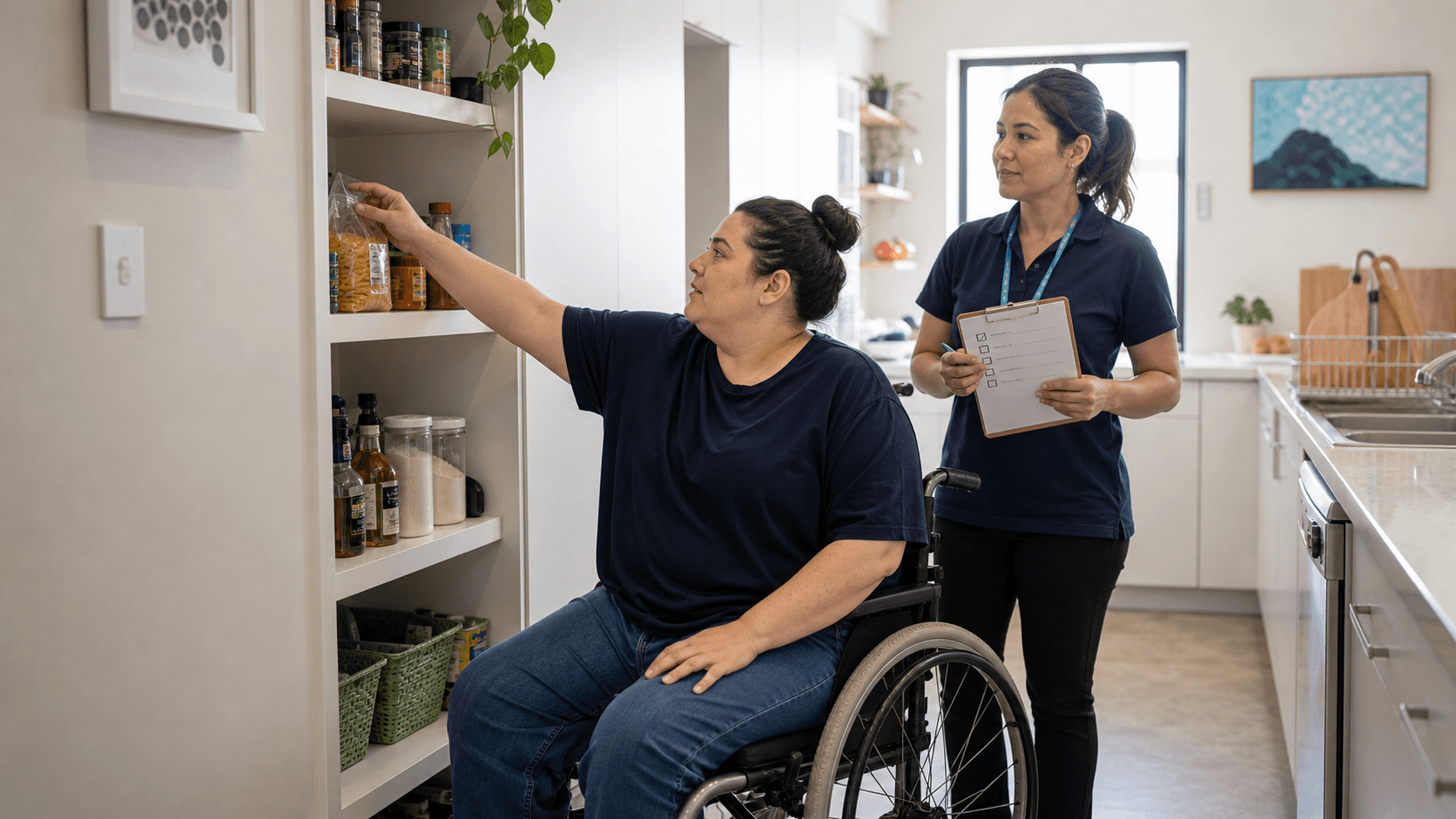
Support can begin with practical daily routines: getting ready, preparing meals, keeping track of the week, and feeling more settled at home. The goal is not to take over, but to make each step clearer and easier to repeat.

Getting out
For appointments, errands, activities, and community access, support can include planning the trip, preparing before leaving, navigating the destination, and building familiar travel routines over time.

Home confidence
Household and shared living support can help make home routines more predictable, from laundry and kitchen tasks to planning meals, organising spaces, and keeping daily responsibilities manageable.

Community connection
Community support is shaped around the participant's interests, whether that means visiting a library, joining a group activity, attending a market, or practising social confidence in familiar local places.
Local support across Melbourne
KIT Care supports participants in homes, appointments, errands, community activities, and familiar local places. Availability can vary by suburb, timing, and support type, so we keep service-area conversations practical and honest.
Tell us the suburb, preferred times, and the kind of support you are considering. We can then discuss whether KIT Care appears to be a suitable local fit before any service arrangement is made.

Customer Reviews
Emily Wilson
★★★★★
The support felt calm and organised from the first conversation. We appreciated that routines, communication preferences, and small details at home were discussed before services started, rather than being treated as an afterthought.
James Miller
★★★★★
The team explained service fit in plain language and kept the discussion focused on the participant's goals. It made it easier to understand what support could look like without needing to know every registration group first.
Sarah Bennett
★★★★★
I felt listened to when we talked about my weekly routine. The support was not about rushing through tasks; it was about helping me feel more confident doing the things that matter in my own way.

Proudly supporting Melbourne communities
KIT Care supports participants, families, and support networks with services that feel personal, practical, and dependable.
Frequently asked questions
Ask us a question ->How do I get started with KIT Care?+
Contact us by phone or email and tell us what kind of support you are looking for. We will talk through goals, routines, service area, timing, and whether the relevant support group appears to fit before any service arrangement is discussed.
Do I need to know the exact NDIS support category?+
No. Many people begin with a practical need, such as help at home, transport, community access, or building life skills. We can explain which service group may be relevant in plain language and keep the conversation focused on real support.
Can my family, advocate or support coordinator contact you?+
Yes, when the participant wants them involved. We can speak with family members, advocates, nominees, or support coordinators to understand goals, communication preferences, service fit, and next steps while keeping participant choice and consent at the centre.
Can I choose or request a preferred support worker?+
You can share preferences such as communication style, routine, timing, interests, gender preference, or cultural considerations. We aim to match support thoughtfully where availability allows, and we can review arrangements if something is not working well.
What areas do you support?+
KIT Care supports participants across Melbourne communities, including home, appointments, local activities, errands, and community settings. Because availability can vary by suburb, support type, and timing, it is best to contact us with your location and preferred schedule.
How do you protect privacy and dignity?+
We treat personal information carefully and approach support with respect for privacy, home routines, communication needs, and personal preferences. This is especially important where support involves personal care, home tasks, family conversations, or sensitive daily living details.
What if I want to give feedback or raise a concern?+
Feedback is welcome from participants, families, advocates, and coordinators. You can raise concerns, request changes, or share positive feedback so support can be reviewed and improved. Serious or urgent safety concerns should always be escalated through appropriate emergency channels.
Let's talk about how we can support you
We're here to answer your questions and help you take the next step.